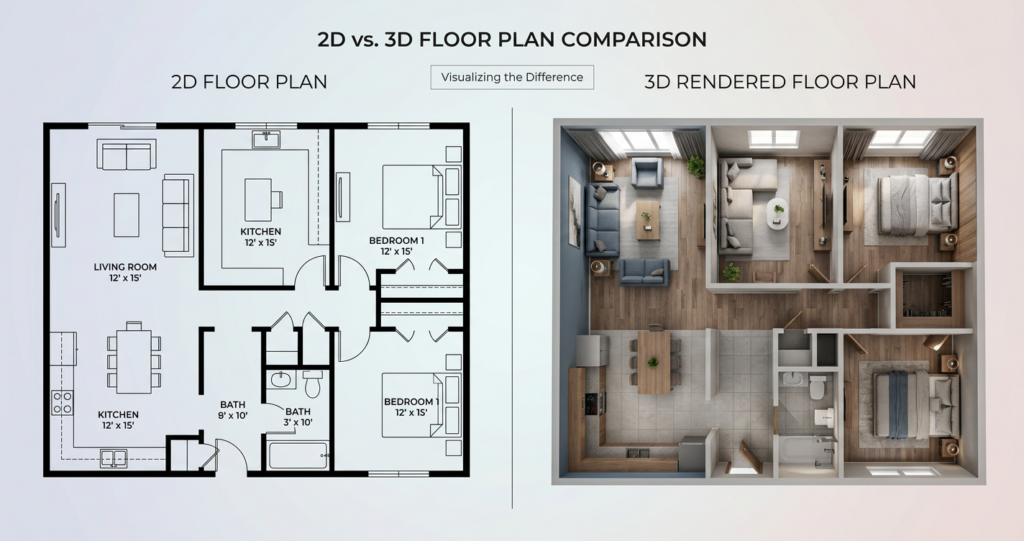

Why Buyers Trust 3D Rendered Plans More Than 2D Floor Plans In the high-stakes world of real estate, the first point of contact between a buyer and their future home often happens on a screen. For decades, the standard tool for this interaction was the 2D floor plan—a flat, technical…
As we navigate through 2026, the real estate landscape has moved far beyond traditional “bricks and mortar” marketing. In an era dominated by high-speed digital interaction, augmented reality, and global investment, 3D Visualization has shifted from a “luxury add-on” to the core engine of property development. For developers, the ability…
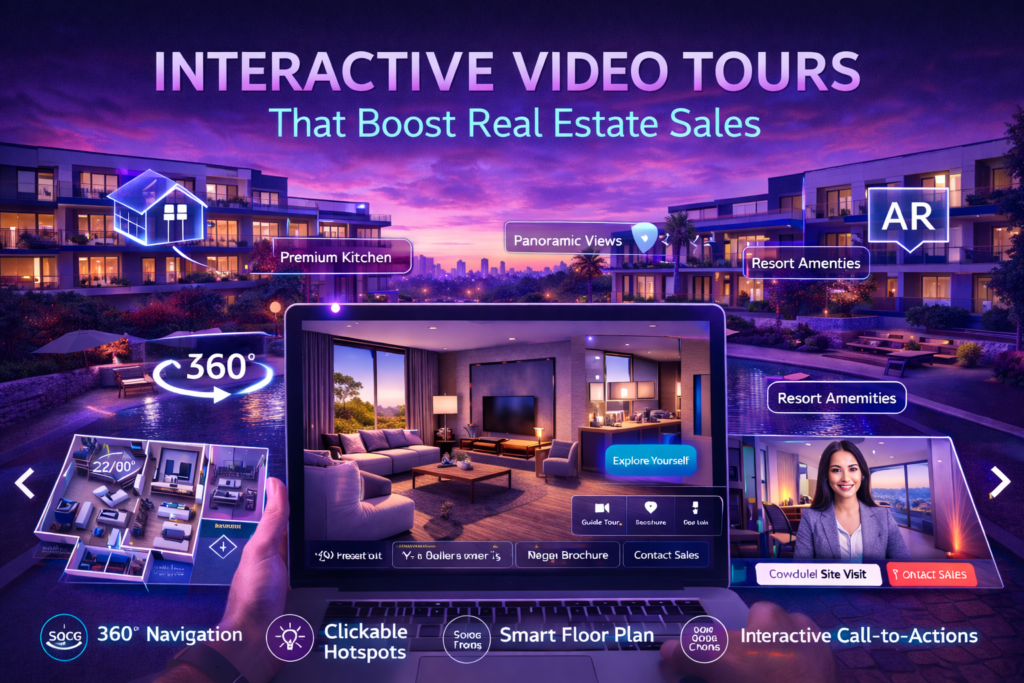
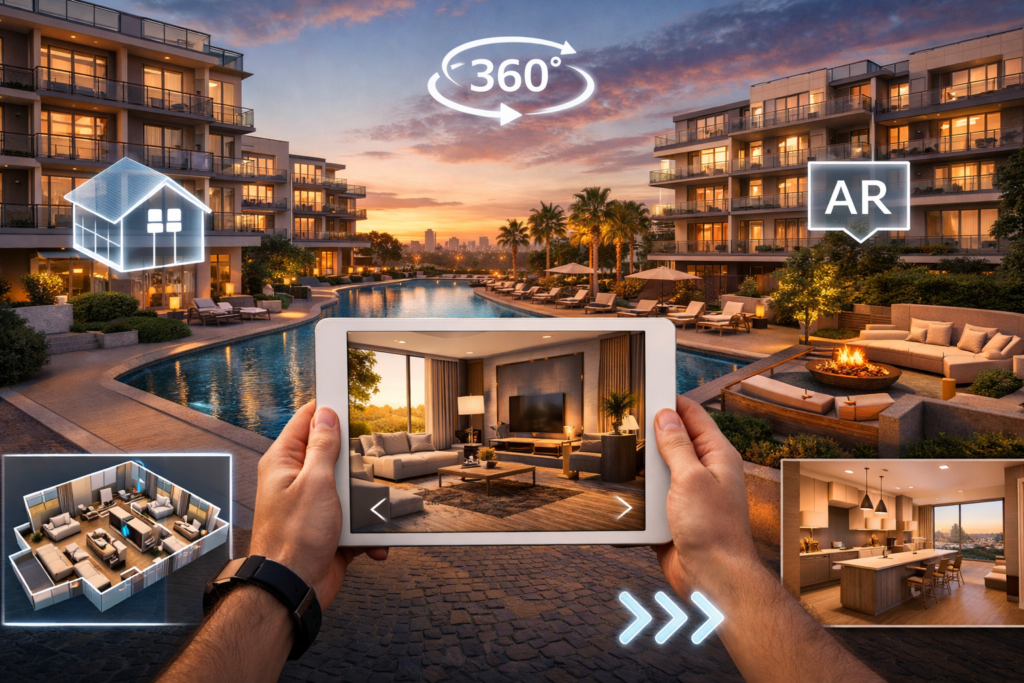
In 2026, the real estate market is no longer defined by physical footfall but by digital engagement. With the rise of the “digital-first” homebuyer, traditional static photos and even standard videos are being outpaced by a more powerful tool: Interactive Video Tours. Unlike a passive video that a viewer simply…
In the rapidly evolving real estate market of 2026, the first time a buyer “visits” a property is rarely at a physical construction site. Instead, it happens on a smartphone screen, a laptop, or through a VR headset. As property discovery becomes digital-first, developers are increasingly relying on high-end 3D…
The Indian real estate industry is no longer just about brick-and-mortar structures—it is evolving into a digitally driven, customer-centric domain. Among the key technologies driving this transformation is 3D rendering and photorealistic renders, which is helping developers market properties more effectively, shorten sales cycles, and create immersive buyer experiences. This…
In today’s visually driven and highly competitive real estate market, first impressions matter more than ever. Buyers, investors, and stakeholders increasingly make decisions based on what they see—often before a single brick is laid. This is where photorealistic architectural renderings play a transformative role. These high-definition digital visualizations don’t just…