

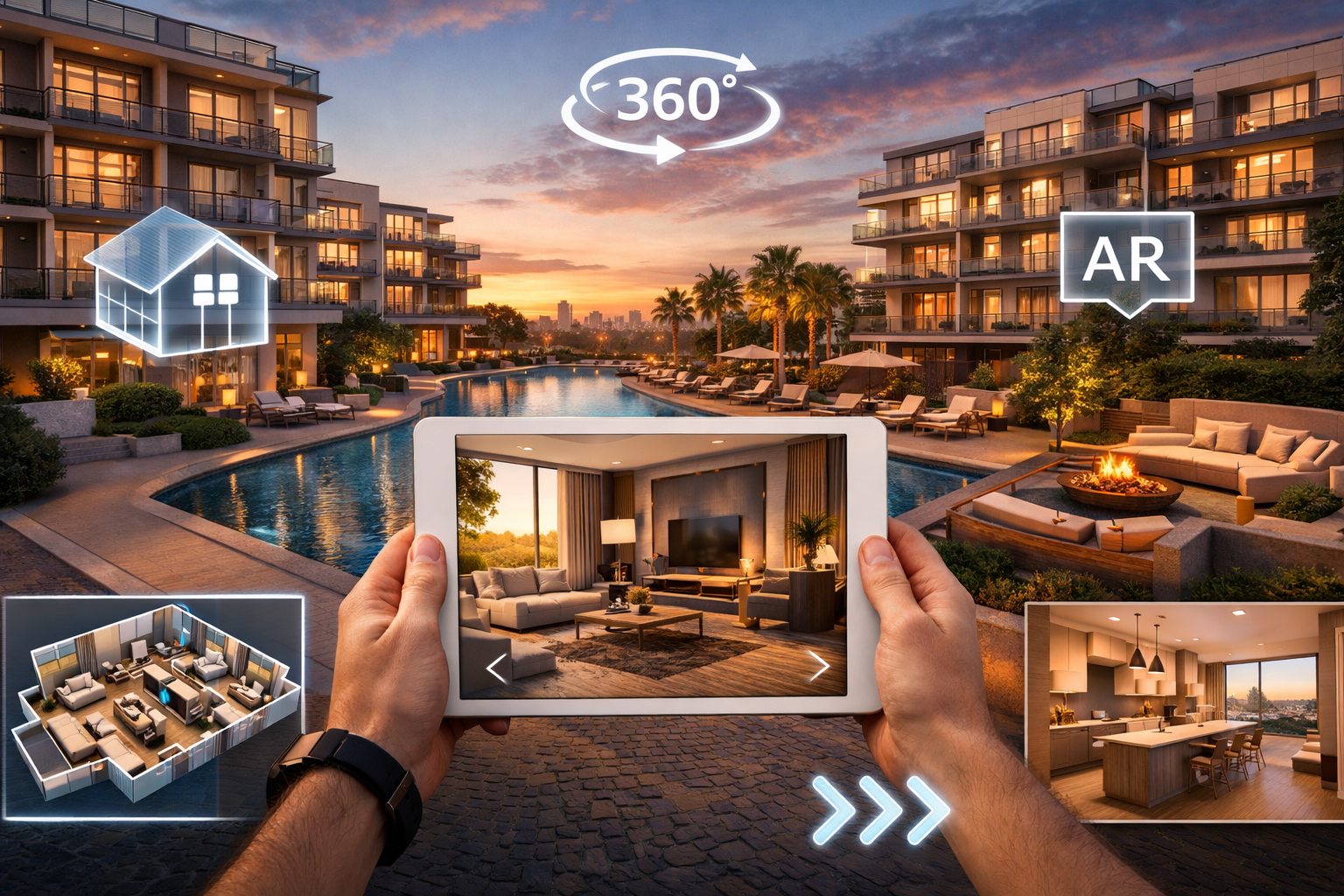
In the rapidly evolving real estate market of 2026, the first time a buyer “visits” a property is rarely at a physical construction site. Instead, it happens on a smartphone screen, a laptop, or through a VR headset. As property discovery becomes digital-first, developers are increasingly relying on high-end 3D renderings and virtual walkthroughs to tell their project’s story.
Creating these stunning visuals is a high-stakes blend of architectural precision and cinematic artistry. Here is a look behind the scenes at how we bring real estate projects to life long before the first brick is laid.
1. Why 3D Renderings & Virtual Walkthroughs Matter Today
The modern buyer is time-conscious and visually driven. In 2026, over 50% of buyers skip in-person tours until they have explored a 3D virtual tour.
- Reducing Uncertainty: For under-construction projects, 2D blueprints can be intimidating and confusing. 3D visuals bridge this gap, showing the exact finish, light quality, and spatial volume, which reduces buyer anxiety.
- Faster Decision-Making: When a buyer can “walk” through their future living room, the emotional connection is immediate. This confidence leads to shorter sales cycles, with listings featuring virtual tours closing up to 31% faster.
2. From Drawings to 3D Models
The journey begins with technical architectural plans. Our team takes these 2D CAD (Computer-Aided Design) drawings and converts them into a detailed 3D “wireframe.”
- Precision and Scale: Every wall, window, and doorway is modeled to exact proportions. This ensures that the digital twin is a 1:1 representation of the final physical structure.
- RERA Compliance: Accuracy is not just about aesthetics; it’s a legal necessity. We ensure that the Carpet Area shown in the 3D model aligns perfectly with the RERA-registered plans, maintaining transparency and trust with the end-user.
3. Creating the Virtual Walkthrough Experience
A walkthrough isn’t just a moving camera; it’s a carefully choreographed journey. We plan a “camera path” that mimics how a person naturally explores a home.
- Natural Flow: The experience typically begins at the grand entrance, flows into the sun-drenched living area, and moves through the bedrooms to highlight the views.
- Immersive Detail: By simulating human eye-level movement and adding ambient sounds—like the soft rustle of trees or distant city hum—we make the viewer feel like they are physically standing inside the property.
4. Technology & Tools of the Trade
To achieve photorealism, we utilize the same high-octane tools used in blockbuster films and AAA video games.
- Modeling & Rendering: We use industry leaders like Autodesk 3ds Max and Maya for structural modeling. For lighting and textures, V-Ray or Corona Renderer allows us to simulate how light bounces off marble vs. wood.
- Real-Time Animation: Engines like Unreal Engine 5 enable interactive walkthroughs where buyers can change kitchen finishes or lighting in real-time.
- High-Resolution Output: We produce 8K renders suitable for everything from Instagram Reels to massive site hoardings and glossy brochures.
5. How These Visuals Help Buyers & Investors
Visualization is a powerful tool for both homeowners and professional investors.
- Outstation Buyers & NRIs: For those living in other cities or abroad, a virtual walkthrough is the only way to evaluate a project without flying in. It offers a level of transparency that static photos simply cannot match.
- Investment Evaluation: Investors use these models to judge the project’s rental and resale potential. Seeing the common amenities, parking structures, and landscaping helps them understand the “lifestyle premium” the project will command.
6. Using 3D Visuals in Marketing & Sales
A stunning 3D render is the most versatile asset in a developer’s marketing toolkit.
- Social Media Power: 3D “fly-through” reels generate 2-3x higher engagement on platforms like Instagram and TikTok compared to standard photos.
- WhatsApp & Email: Sales teams share links to interactive tours via WhatsApp, allowing prospects to explore the property at their own pace and share it with family members for instant feedback.
- The Hero Section: On the project website, the 3D walkthrough serves as the “hero” content that keeps visitors engaged longer, directly increasing lead conversion rates.
7. Final Thoughts: Bridging Imagination and Reality
Ultimately, 3D renderings and virtual walkthroughs are about more than just technology; they are about transparency and commitment. By showing a project in such vivid detail, a developer makes a promise of quality and design to their buyers.
These visuals allow you to step into your future today. They bridge the gap between a dream and a deed, providing the clarity needed to make one of life’s most significant investments with absolute confidence.
Frequently Asked Questions
1. What is a 3D rendering in real estate?
A 3D rendering is a photorealistic, computer-generated image of a building or interior space. Unlike a 2D drawing, a 3D render uses advanced software to simulate depth, lighting, shadows, and textures (like marble or wood). In real estate, these visuals allow developers to showcase a property before it is built. They provide a “window into the future,” helping buyers see the exact materials, color palettes, and architectural details of their potential home. High-quality renders are essential for setting realistic expectations and creating an emotional connection between the buyer and the unbuilt space.
2. How do virtual walkthroughs help in selling under-construction properties?
Virtual walkthroughs are game-changers for off-plan sales because they eliminate the “imagination gap.” Most buyers struggle to visualize a finished home from a blueprint. A walkthrough allows them to virtually step inside the property, experience the room flow, and gauge the ceiling height and natural light levels. This immersive experience builds massive confidence, reducing the perceived risk of buying a home that doesn’t exist yet. By offering a “digital show house” 24/7, developers can secure bookings and financing much earlier in the construction cycle, significantly accelerating the project’s cash flow.
3. Are 3D walkthrough videos accurate representations of the final project?
Yes, in 2026, 3D walkthroughs are highly accurate digital twins of the final project. Professionals create these videos directly from the architect’s CAD or BIM files, ensuring that dimensions, layout, and room proportions are exact. Modern rendering engines (like Unreal Engine 5) even simulate physically accurate lighting based on the building’s real-world orientation. Furthermore, as RERA (Real Estate Regulatory Authority) norms have tightened, developers are legally obligated to ensure that the “Carpet Area” and amenities shown in marketing videos align with the final delivery, making these visuals a reliable benchmark for buyers.
4. Why are 3D visuals important in real estate marketing?
In a digital-first market, 3D visuals are the “hero” of any marketing campaign. They stop the scroll on social media and keep users engaged on websites much longer than static photos. Beyond aesthetics, they serve as a powerful storytelling tool, allowing developers to sell a lifestyle rather than just square footage. High-quality visuals establish a brand as premium and trustworthy. They also provide versatility; a single 3D model can be used to generate high-res images for hoardings, cinematic reels for Instagram, and interactive tours for sales presentations, ensuring a cohesive and professional brand image.
5. Can buyers rely on virtual walkthroughs instead of site visits?
While a physical site visit is still the final step for many, virtual walkthroughs have become a primary screening tool. For outstation or international (NRI) buyers, a high-fidelity virtual tour is often sufficient to make a booking. These tours allow you to check the view from the balcony, the proximity of the kitchen to the dining area, and the overall spatial volume. While they don’t capture the “smell of the air” or neighborhood noise, they provide about 90% of the information needed. In 2026, most buyers use virtual tours to shortlist projects, visiting only their top choice in person.
6. Do 3D walkthrough videos improve real estate sales conversions?
Data from 2024 and 2025 shows that properties marketed with 3D walkthroughs see up to an 87% higher sales conversion rate. Because walkthroughs are immersive, they keep potential buyers on a listing for up to 5-10 times longer than photo-only listings. This increased engagement leads to more qualified leads; by the time a buyer calls an agent, they already know the layout and are “mentally moved in.” This transparency speeds up the decision-making process, often resulting in faster closures and a higher ROI on marketing spend for the developer.
7. Are 3D renderings useful for digital marketing and social media?
3D renderings are the “gold standard” for real estate social media. In the age of TikTok and Instagram Reels, a cinematic “fly-through” video of a luxury penthouse or a community garden is highly shareable and has the potential to go viral. These visuals allow marketers to run targeted ads that show exactly what the user is buying. Unlike site photos, which can look messy during construction, 3D renders show the project in its perfect, finished state—complete with lush landscaping and golden-hour lighting—making them far more enticing for digital audiences.
8. How do 3D renderings help investors evaluate a property?
Investors look beyond aesthetics to evaluate a property’s ROI potential. 3D renderings help them assess the “lifestyle value” and functionality of a project. By seeing the layout of common areas, the scale of the parking facilities, and the quality of the lobby, investors can better estimate future rental yields and resale prices. Interactive 3D models also allow investors to see the project in its local context, including surrounding roads and upcoming infrastructure. This level of detail reduces the risk of “blind” investing, especially for those looking to buy units in different cities.
9. Are virtual walkthroughs mobile-friendly?
Absolutely. In 2026, over 80% of property searches occur on mobile devices, so virtual walkthroughs are optimized for smartphones. Modern tours use “responsive rendering,” meaning they load quickly and can be navigated using simple touch-and-swipe gestures. Many also support “gyroscope” viewing, where the view changes as you move your phone, creating a window-like effect into the room. Whether it is a YouTube video link, a WhatsApp-shared 360-degree file, or a web-based interactive tour, the experience is designed to be seamless on any device without requiring a separate app download.
10. Can 3D walkthroughs showcase amenities and common areas?
Yes, showcasing the “communal lifestyle” is one of the biggest strengths of 3D walkthroughs. Developers use them to highlight grand entrance lobbies, rooftop infinity pools, gymnasiums, and landscaped gardens. For large gated communities, “aerial fly-throughs” show the connectivity between buildings and the proximity of amenities like jogging tracks or kids’ play areas. This is crucial because buyers are not just purchasing an apartment; they are buying into a community. Seeing these amenities in photorealistic detail helps justify the premium pricing and maintenance costs of a modern project.
11. How can buyers view the full 3D walkthrough of the project?
Viewing a full 3D walkthrough is easier than ever. Most developers host these tours directly on the project’s official website or landing page, often featuring a “Virtual Tour” button in the hero section. You can also find them on the developer’s YouTube channel or social media pages. For a more personalized experience, sales teams can share a direct link via WhatsApp or email. Some premium projects also offer “Guided Virtual Tours,” where a sales executive joins you on a video call and walks you through the 3D space in real-time, answering your questions as you “explore” together.